
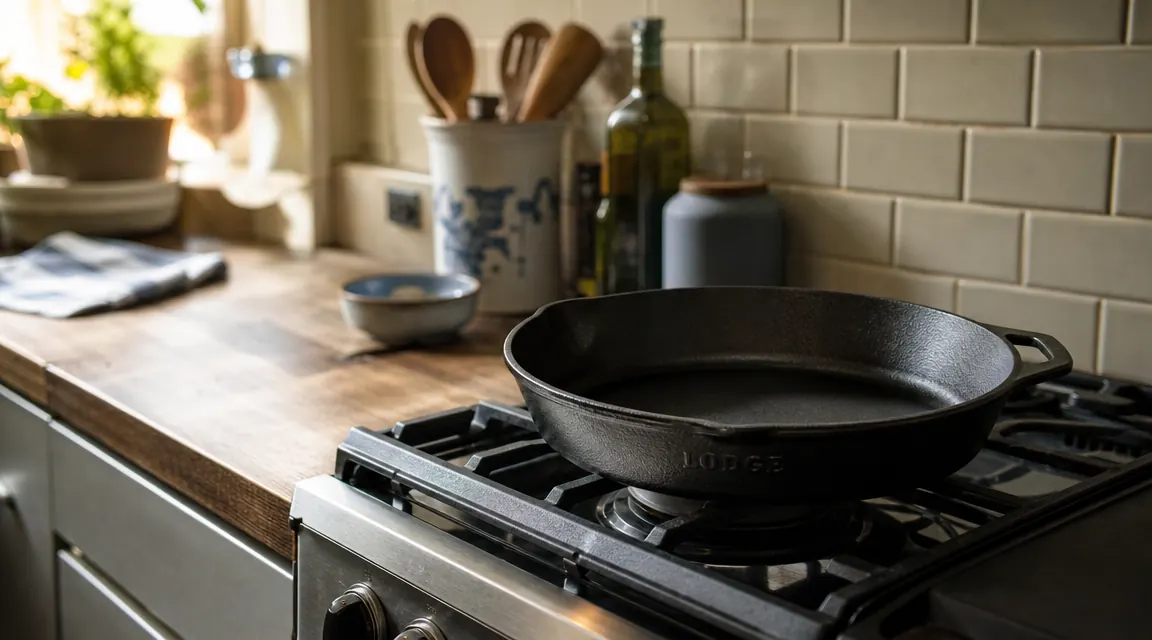
I want to be upfront with you: I almost returned this pan at week three. Not because it was defective. Because I had no idea what I was actually getting into when I ordered a Lodge 12-inch cast iron skillet based on the 164,000 five-star reviews and a vague sense that cast iron was what serious cooks used. I am not a serious cook. I am Darlene. I work in accounting, I have two kids in middle school, and most nights dinner needs to happen in under 40 minutes or someone is eating cereal. What I found out pretty quickly is that cast iron asks something of you that nonstick never did. That is not necessarily a bad thing. But nobody in the reviews said it quite that plainly, so I am saying it now.
This is not the review that talks about how this skillet will last 100 years and you can pass it to your grandchildren. That review exists elsewhere on this site. This one is for the person standing in their kitchen in week two, staring at an orange spot near the rim and wondering if they broke their new pan.
The Quick Verdict
Great pan, real learning curve. Worth buying only if you understand upfront that the first 30 days are an adjustment period, not a honeymoon.
Amazon Check Today's Price →If you already know cast iron and just want the pan, here it is.
The Lodge 12-inch is the most-reviewed cast iron skillet on Amazon for a reason. At the current price, it is genuinely hard to beat for the quality. Just read the rest of this first.
Amazon Check Today's Price on Amazon →How I Actually Used This Pan (Not the Pretty Version)
I bought the Lodge 12-inch in late February. My plan was to use it for searing chicken thighs, making skillet cornbread on camping trips, and eventually replacing my scratched-up nonstick. Simple enough. What actually happened was more complicated.
The first thing I cooked was scrambled eggs, which is apparently the worst possible debut for a cast iron pan. They stuck so badly I spent 15 minutes scraping the pan and another 10 minutes convincing my son that his eggs were fine, they just had extra texture. Lesson one: cast iron and eggs have a relationship that takes time. You do not start there.
After that rough start, I switched to higher-fat cooking. Bacon on a Saturday morning. Seared pork chops on a Tuesday. Burgers when it was too cold to grill outside. The pan performed well for all of those, and I started to understand what it was actually good at. But the adjustment period was real, and about three weeks in, I spotted the rust.
The Rust Scare: What Nobody Tells You About That First Month
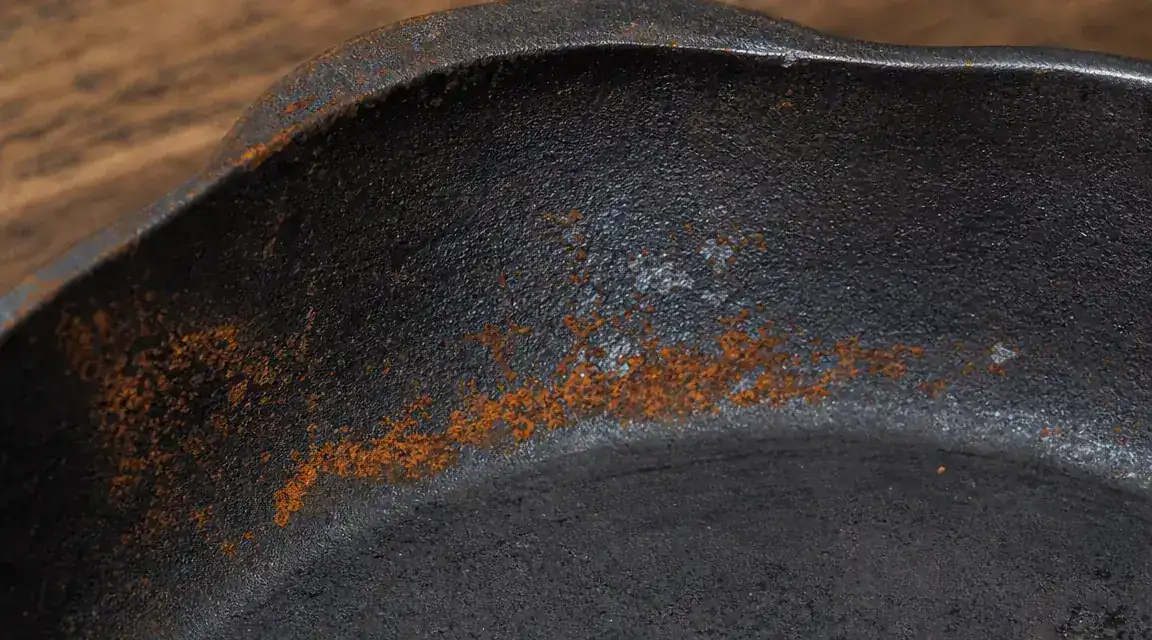
I left the pan on the drying rack overnight after washing it. I thought I had dried it well. I had not dried it well enough. The next morning there were small rust-colored spots near the rim and one on the cooking surface. My immediate reaction was that I had ruined the pan. My second reaction was to Google furiously at 6 AM while making coffee.
Here is what I found out, and what should probably be printed on the box: surface rust on cast iron is not a death sentence. It is a signal. The pan is iron. Iron oxidizes when it gets wet and sits. The fix is to scrub the rust off with a stiff brush or even a little steel wool, rinse it, dry it immediately and thoroughly on a warm stove burner, then rub a very thin layer of oil over the whole surface and let it sit. The pan was fine within 20 minutes. But the experience spooked me because nobody had framed it that way in advance.
Surface rust on cast iron is not a death sentence. It is a signal. The fix takes 20 minutes. But nobody writes that on the box, and if you do not know it, you panic.
The rust risk is highest in the first few weeks before the seasoning has fully built up. After month two, when I had cooked with fat in the pan dozens of times, the seasoning thickened and the rust risk dropped significantly. But that first month requires more intentional care than nonstick ever did. Dry it on the burner after every wash. Rub a tiny bit of oil on before storage. That is the routine.
The Weight Problem Nobody Takes Seriously Enough
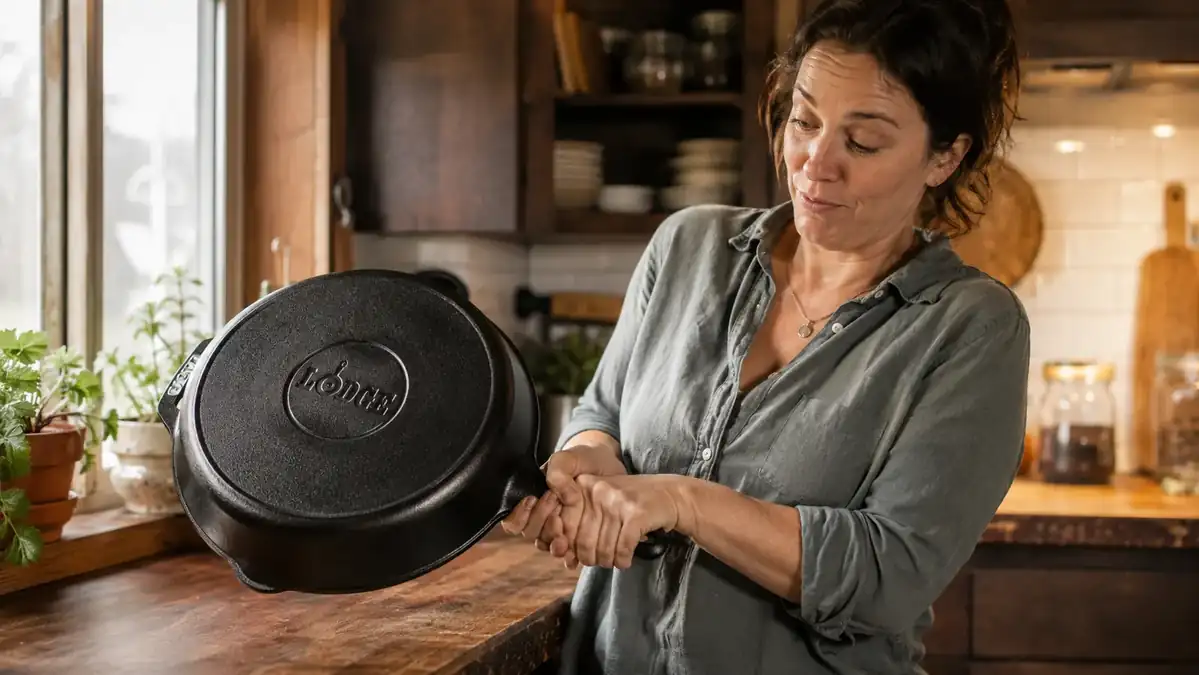
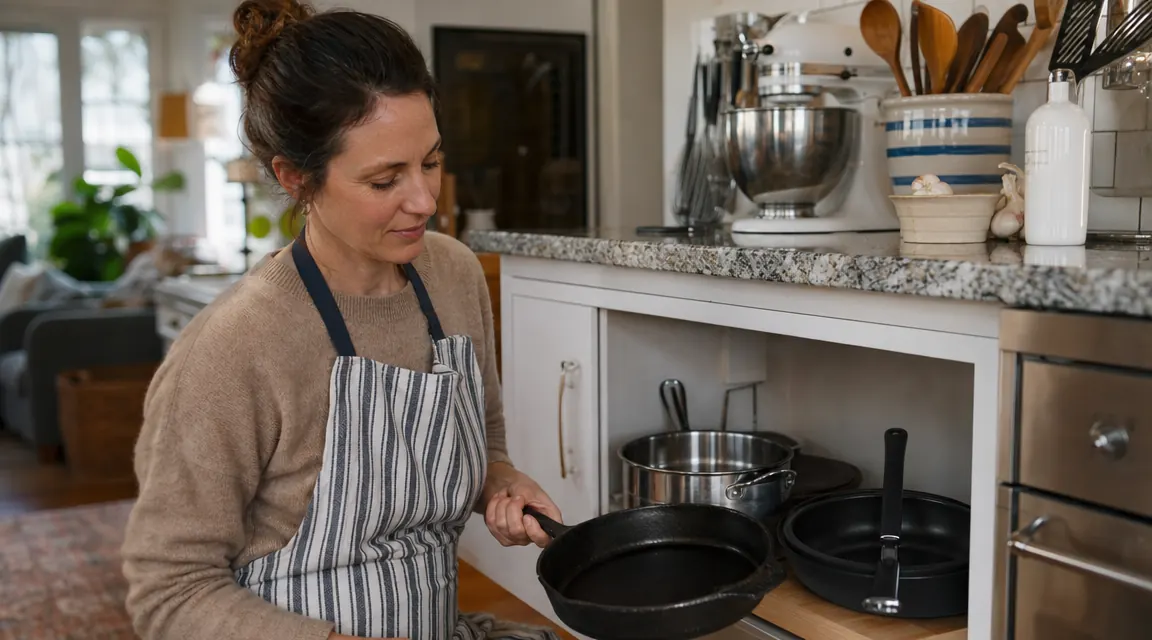
The Lodge 12-inch weighs about 8 pounds empty. Add a pound of chicken thighs and you are lifting close to 10 pounds with one hand while trying to flip or maneuver the pan. I have a normal adult grip and no wrist problems. This pan still taxes me. My 11-year-old daughter asked if she could help flip the cornbread one night and I told her no, not yet, because I was genuinely worried about the weight.
Most reviews either skip this entirely or say something like 'yes it is heavy but you get used to it.' That is true, but there is a spectrum. If you have any wrist, grip, or shoulder issues, the Lodge 12-inch deserves serious consideration before you commit. The smaller 10-inch version is meaningfully lighter if you mostly cook for one or two people. The 12-inch is the better choice for family-sized meals, but you should know what you are signing up for physically.
The assist handle on the back of the pan helps a lot when you are using both hands. The main handle gets hot faster than I expected during high-heat cooking, so a good handle gripper or folded dish towel is not optional, it is required equipment. My nonstick had a silicone-wrapped handle that stayed cool. Cast iron does not work that way. Both handles get hot. Both need protection.
The Learning Curve: Four Things I Had to Unlearn From Nonstick
I cooked exclusively on nonstick for about eight years before this pan. That background created four specific habits I had to break.
First: preheat time. Nonstick heats fast and unevenly. Cast iron heats slowly but holds heat in a way that actually sears food instead of just steaming it. I now give the pan five to eight minutes on medium before adding anything. That felt like a waste of time at first. Now I use it to prep my vegetables or get the seasoning on whatever I am cooking.
Second: soap is not the enemy, but it is not necessary. I spent weeks washing this pan with a tiny drop of dish soap because my nonstick habits were strong. Cast iron can handle mild soap occasionally without damage. But plain hot water and a stiff brush gets it clean, which is all it needs most of the time. I have since stopped using soap and the seasoning has built up faster.
Third: do not crowd the pan. I used to dump everything in at once. Cast iron punishes that more than nonstick does because the pan holds its temperature so well. Too much food too fast drops the surface temp and you get steaming instead of searing. I now cook in batches, which takes longer but gives much better results.
Fourth: eggs, cheese, and delicate fish are not beginner foods for this pan. Start with bacon, burgers, steak, or anything with enough fat to protect the surface while the seasoning matures. Once the surface looks almost glassy, you can start experimenting with stickier foods.
Where the Lodge 12-Inch Actually Earns Its Keep
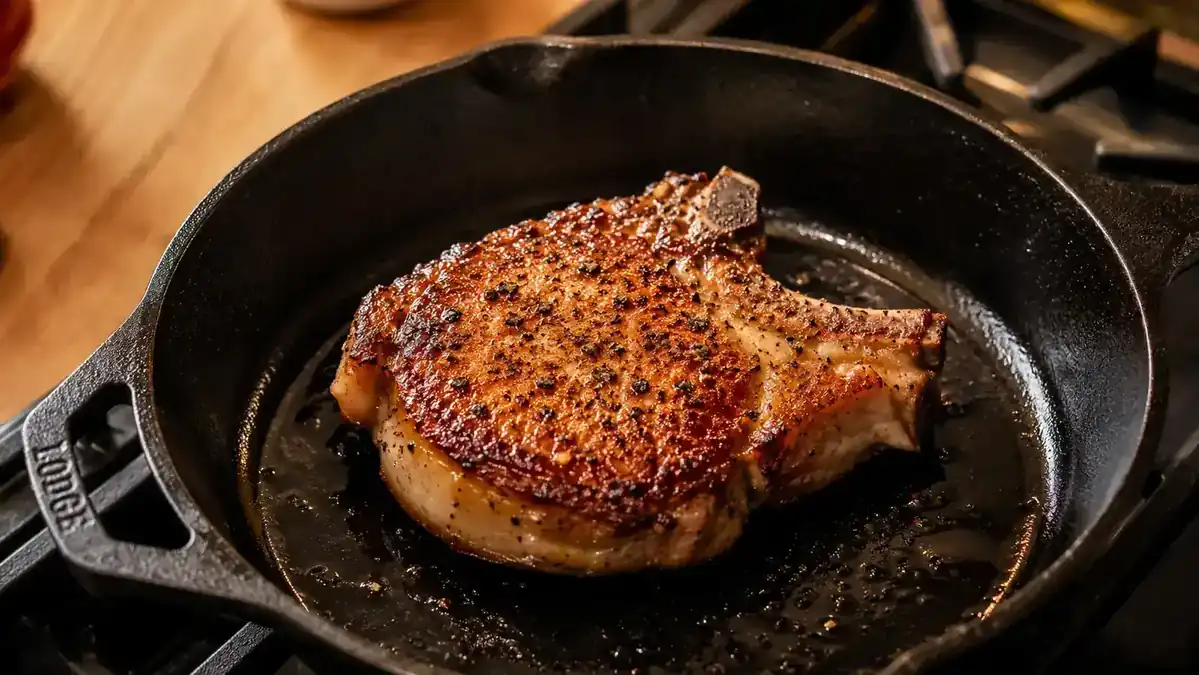
None of what I just wrote means this is a bad pan. It is a genuinely excellent pan for specific things. The sear it puts on a pork chop is better than anything I got from my old nonstick or my stainless steel. The fact that it goes from stovetop to a 450-degree oven without issue has changed how I finish thick cuts of chicken. I season it in the oven instead of on the stove, which is a habit my nonstick never allowed.
For camping, it is almost comically good. I brought it on a spring trip to a state park in March and cooked over a campfire without any worry about damaging it. The performance over fire is in a completely different league from anything coated. You do not baby a cast iron pan at a campsite. You just cook.
The price is also still remarkable. Over 164,000 reviews, a brand that has been making this pan for over a hundred years, and the current price is well under what you would spend on a mid-range nonstick that will need replacing in three years. If you do the care correctly, this pan lasts indefinitely. That long-term calculus matters.
What I Liked
- Produces a better sear than nonstick or standard stainless steel
- Goes stovetop to oven to campfire without any issue
- Comes pre-seasoned and ready to cook on day one
- Price is low relative to the lifespan of the pan
- Seasoning improves with every use, so it gets better over time
- Virtually indestructible if cared for correctly
Where It Falls Short
- 8 pounds empty is physically demanding, especially for smaller hands or wrist issues
- Both handles get hot during stovetop cooking and require protection
- Rust appears quickly if the pan is left wet, especially in the first month
- Not suitable for eggs, cheese, or delicate fish until the seasoning is well established
- Requires a 5-8 minute preheat for best results, which changes your cooking timing
- Not dishwasher safe and requires more intentional care than nonstick
Who This Is For
This pan is for you if you cook meat and vegetables regularly, you can spend 15 minutes in the first week reading about cast iron care, and you are not looking for a low-maintenance option. It is especially good if you camp or cook outdoors, if you want something that goes oven-safe at high temps, or if you are tired of replacing nonstick pans every few years. People who put in the initial learning curve consistently become loyal cast iron cooks. The pan does reward patience.
Who Should Skip It
If you have wrist, grip, or shoulder issues that make lifting 8-10 pounds difficult, this specific size will frustrate you. Consider the 10-inch Lodge instead. If you primarily cook eggs, fish, or other delicate high-stick foods and do not want to invest in the learning curve, a good stainless steel pan with proper technique will serve you better. And if you know you will not remember to dry the pan on the burner after washing it, the rust cycle will become exhausting fast. Cast iron rewards consistent, simple habits. If your kitchen routine is already chaotic, that friction is real.
I want to be clear: I kept the pan. I use it several times a week now and the seasoning looks great. But I went in expecting nonstick with better sears, and what I got was a piece of cookware with its own requirements and logic. Knowing that upfront would have saved me a stressful Tuesday morning with a rust-spotted pan and a lot of anxious Googling.
Ready to commit to the learning curve? The Lodge 12-inch is still the best value starting point.
At the current price, no cast iron skillet in this class comes close to the Lodge for quality, consistency, and the breadth of real-world testing behind it. If you go in with clear expectations, you will not regret it.
Amazon Check Today's Price on Amazon →