
I have thrown away four nonstick pans in the last eight years. Scratched coating, warped bottoms, handles that wobbled loose after a season of use. Each one cost me mid-range money and lasted about two years before I got nervous enough about the flaking surface to toss it. Then I bought a Lodge 12-inch cast iron skillet for about the same price as one of those nonstick pans, and I have not bought a single pan since. That was three years ago. My husband uses it. My kids eat pancakes off it on Saturday mornings. I threw it in the truck for a camping trip last fall and cooked over an open fire with it. If you are still rotating through nonstick pans, this list is for you.
The Lodge cast iron skillet is rated 4.7 stars across more than 164,000 reviews on Amazon. That is not a typo. Below are the ten reasons people keep buying this pan, and the ten reasons I will never go back to nonstick.
Still replacing cheap nonstick pans every couple of years? This is the last skillet you'll buy.
The Lodge 12-inch cast iron skillet comes pre-seasoned and ready to cook. Over 164,000 Amazon reviews and counting. Check today's price before it sells out.
Amazon Check Today's Price on Amazon →It Lasts Longer Than You Will
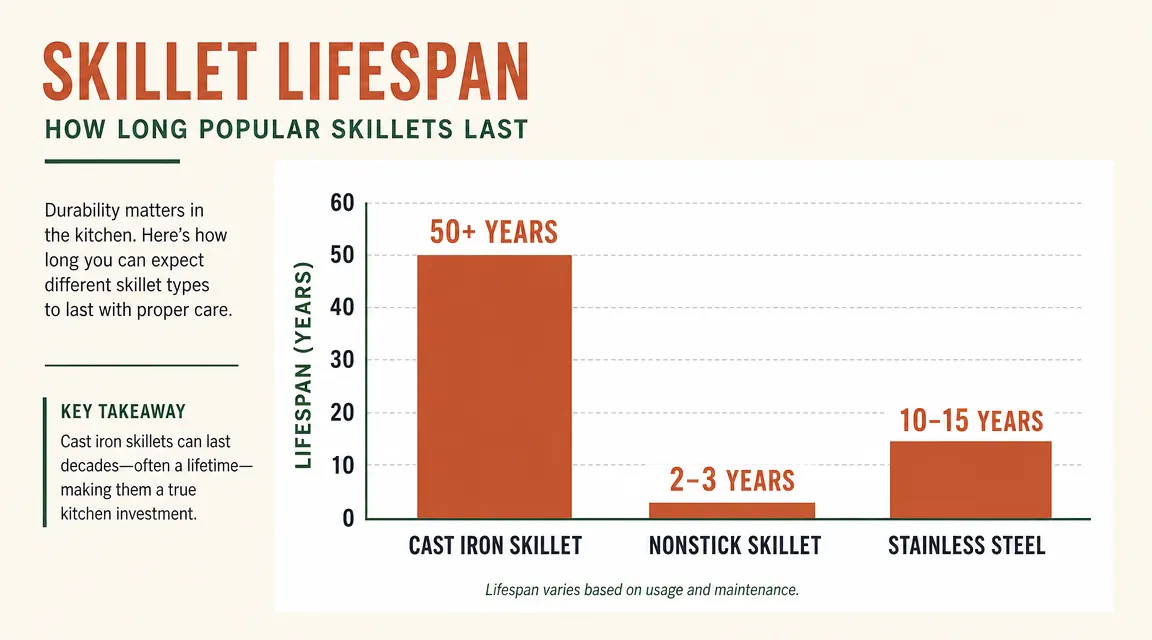
Cast iron does not warp, does not scratch, and does not develop a coating that flakes into your food. A well-maintained Lodge skillet will genuinely outlast the house you cook it in. Lodge has been making cast iron since 1896. Some of their skillets from the mid-1900s are still in active daily use today. Nonstick pans are a two-to-three year purchase. Cast iron is a one-time buy.
The Seasoning Gets Better With Every Use
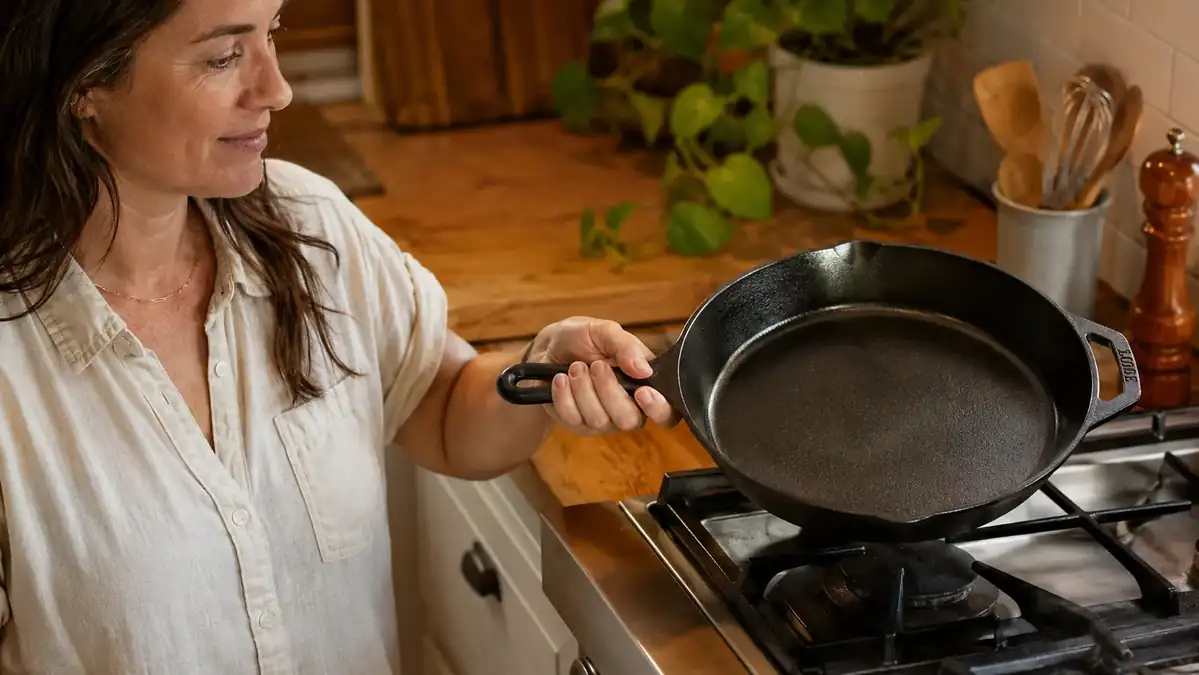
Every time you cook with a cast iron skillet, you are building a better nonstick surface. Bacon drippings, seared butter, roasted vegetables, they all leave behind microscopic layers of polymerized oil that fill the pores of the iron and create a natural release coating over time. You do not replace this surface. You build it. The Lodge 12-inch ships with a factory seasoning so you can cook on it right away, but six months from now it will be noticeably better than the day it arrived.
It Goes From Stovetop to Oven Without a Second Thought
Start a steak on the burner to sear it, slide it into a 500-degree oven to finish. Cast iron handles that without any fuss. Most nonstick pans are oven-safe only to 350 to 400 degrees, which means you are always working around them. The Lodge skillet has no plastic parts, no temperature limits worth worrying about in a home kitchen. One pan, every cooking method. I use mine in the oven for cornbread at 450 degrees at least twice a month.
It Works Over a Campfire
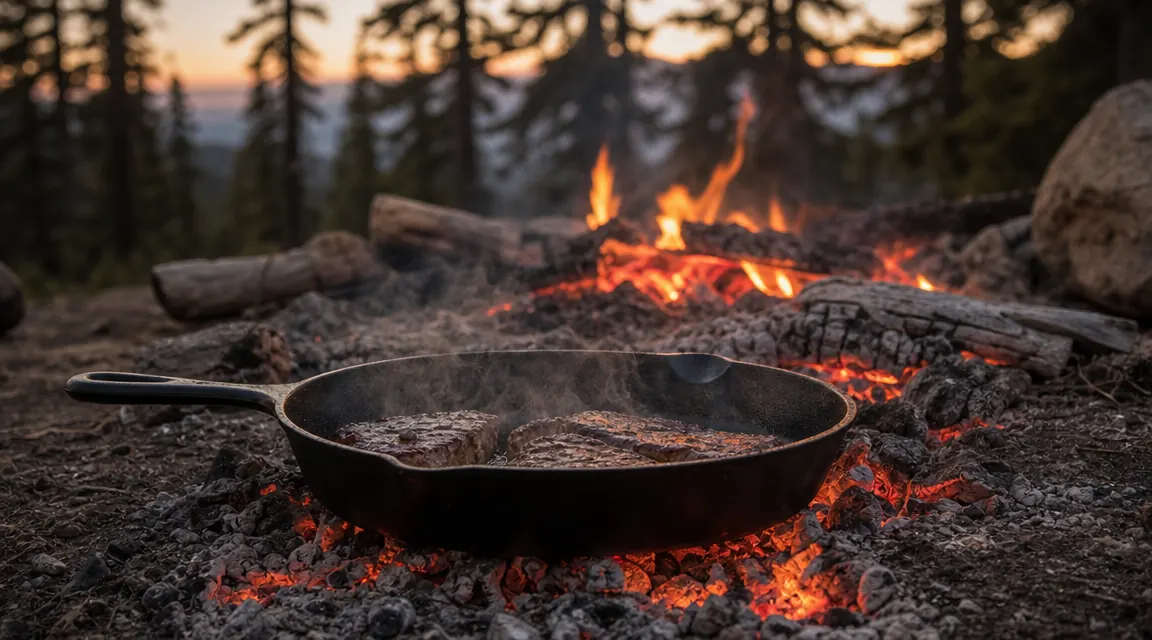
This is the one that sealed it for me. Last October my family camped in the Ozarks for four days. I brought the Lodge skillet instead of my old camp setup and cooked breakfast burritos, sauteed onions for camp stew, and even made a skillet cobbler one night. Cast iron sits flat over coals, handles direct flame without damage, and cleans up easily at the campsite. No other pan in my kitchen crosses over from weeknight dinners to actual outdoor cooking.

Heat Retention Makes Food Actually Taste Better
Cast iron holds heat at a level that thin stainless and nonstick pans simply cannot match. When you drop a cold chicken breast into a cast iron skillet, the pan temperature barely dips. Drop the same chicken breast into a thin nonstick pan and the temperature crashes, the protein steams instead of sears, and you get a gray-bottomed piece of meat instead of a golden crust. The physics of cast iron are why restaurant cooks use it. You get that same result at home.
I have thrown away four nonstick pans in eight years. I have not replaced my Lodge once. The math on that is embarrassingly simple.
The Cleaning Routine Is Simpler Than You Think
People act like cast iron care is some fragile ritual. It is not. After cooking, I rinse the Lodge skillet under warm water, scrub with a stiff brush or chainmail scrubber, dry it on the burner for 60 seconds, and wipe a few drops of oil on it before putting it away. That is it. The whole process takes about three minutes. The only rule worth knowing: do not soak it, and dry it completely. I have a full deep-dive on seasoning and care if you want the detail, but the short version is that cast iron is forgiving once you own one.
It Costs Less Than a Bad Nonstick Pan
The Lodge 12-inch skillet runs in the mid range at current Amazon pricing. A mid-range nonstick pan from a recognizable brand runs in a similar range and needs replacing every two to three years. Over a decade, the nonstick path costs you several replacement pans. The cast iron path costs you one purchase once. I am an accounting assistant. I run these kinds of numbers automatically. Cast iron wins on pure math, and that is before you factor in better food results.
No Mystery Chemicals, No Flaking Coating
PTFE-based nonstick coatings are a legitimate concern if you run them hot and they start to degrade or chip. Cast iron has no coating to chip. The seasoning layer is literally cooked oil, nothing else. When I served scrambled eggs to my kids every morning, I wanted to know exactly what that pan surface was made of. Cast iron gives me that. It is literally iron and oil. That is the whole list of ingredients.
It Doubles as a Serving Dish
Lodge cast iron holds heat long enough to go straight from stove to table and keep food warm through a full family dinner. I put the skillet in the center of the table at least once a week, usually with a frittata or a pan of roasted vegetables. It looks intentional, not lazy. No transferring food to a serving bowl, no extra dishes to wash. The skillet is the serving dish. That matters on a Wednesday night when homework is piling up and everyone is hungry.
It Gets Passed Down, Not Thrown Away
My grandmother had a cast iron skillet she used until her late eighties. It is now in my mother's kitchen. I do not know if my own Lodge skillet will ever be that sentimental to my kids, but the option exists. These pans do not degrade. They do not get worse. They get better. A pan you buy once and eventually hand down to someone you love is a fundamentally different kind of purchase than a disposable nonstick that ends up in a landfill every few years. That matters to me, practically and otherwise.
What I'd Skip
Enameled cast iron is beautiful and it skips the seasoning upkeep, but it costs four to five times as much and you still have to baby the enamel coating. If the enamel chips, the pan is done. A bare Lodge skillet has no coating to chip. For most families cooking everyday meals, the enameled version is a lot of extra money for a pan that is actually more fragile in the ways that matter. If someone gifts you enameled cast iron, use it and love it. But if you are buying your first cast iron pan with your own money, start bare.
I also would not buy a cheap off-brand cast iron skillet to save a few dollars over Lodge. The machining quality on Lodge pans is noticeably better than generic brands at the same price point. Lodge is made in the USA, has been manufacturing since 1896, and ships the pan pre-seasoned. The few dollars you might save on a generic skillet are not worth the risk of a rougher cooking surface and an unknown supply chain. For a pan you plan to use for decades, buy the one with 164,000 reviews behind it.
The Lodge skillet is one of maybe three kitchen purchases I would make exactly the same way if I had to start over from scratch. Practical, permanent, worth every penny.
If you want a full deep-dive into what the Lodge 12-inch is actually like after two years of daily use, including the campfire trip and what I wish I had known on day one, I wrote a detailed Lodge cast iron skillet review that covers all of it. And if you want to nail the care and seasoning routine so your pan builds up a great surface fast, the cast iron care guide walks through the whole process step by step.
Ready to buy the last pan you'll ever need? Check today's price on Amazon.
The Lodge Seasoned Cast Iron Skillet 12-inch is in stock on Amazon now. Over 164,000 reviews, rated 4.7 stars, ships pre-seasoned and ready to cook. No coupons, no tricks, just the current price.
Amazon Check Today's Price on Amazon →